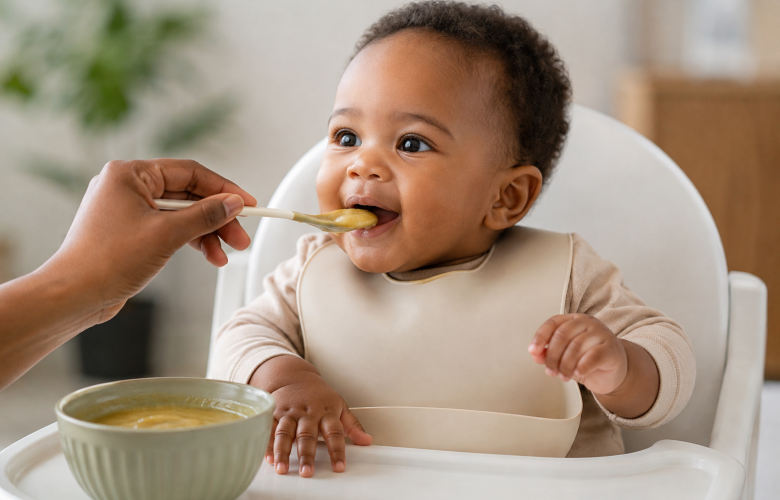
Starting solid foods at six months is an exciting milestone for both babies and parents. After months of breast milk or formula, your baby is ready to explore new tastes, textures, smells and foods.
But starting solids can also feel confusing. How do you know your baby is ready? Which foods should you introduce first? How much should your baby eat? Should you start with porridge, fruits or vegetables?
The good news is that you don’t need complicated recipes or expensive baby foods. With a variety of nutritious foods and a safe approach, you can make the transition to complementary feeding simple.
This guide explains everything you need to know about introducing solids at six months.
Is 6 Months the Right Time to Start Solids?
For most babies, complementary foods can be introduced at around six months while breastfeeding or formula feeding continues.
Before six months, breast milk or infant formula provides the main source of nutrition babies need. Around six months, however, babies begin needing additional nutrients, including more iron, alongside continued milk feeds.
Starting solids doesn’t mean stopping breastfeeding or formula.
Think of solid foods as complementary foods. They complement breast milk or infant formula rather than immediately replacing them.
Signs Your Baby Is Ready for Solid Foods
Age alone isn’t the only consideration. Your baby should also show signs that they are developmentally ready.
Some signs include:
- Sitting upright with good head and neck control.
- Being able to hold their head steady while eating.
- Showing interest in food when other people are eating.
- Opening their mouth when food approaches.
- Being able to move food from the front of the mouth toward the back.
- No longer automatically pushing food out with their tongue.
- Reaching for food or bringing objects toward their mouth.
If your baby was born prematurely or has a medical condition, speak with your healthcare provider about when and how to start complementary feeding.
What Should a 6-Month-Old Eat?
There is no single food that every baby must start with.
The most important thing is to offer a variety of nutritious foods.
Good first foods include:
1. Iron-Rich Foods
Iron is particularly important during this stage.
Examples include:
- Mashed beans
- Lentils
- Well-cooked minced meat
- Fish with bones carefully removed
- Egg
- Iron-fortified infant cereals
- Smooth nut or peanut butter thinned appropriately and offered safely
For Kenyan families, foods such as beans, ndengu, eggs, meat, fish and fortified cereals can be useful options.
2. Vegetables
Offer well-cooked vegetables that are soft enough to mash.
Examples include:
- Pumpkin
- Sweet potato
- Carrots
- Potatoes
- Spinach
- Sukuma wiki
- Peas
You can mash them with a little breast milk, formula or clean water to achieve a suitable consistency.
3. Fruits
Soft fruits are excellent options.
Try:
- Banana
- Avocado
- Pawpaw
- Mango
- Pear
- Apple that has been cooked until soft
Avocado is especially useful because it provides energy and healthy fats.
4. Grains and Cereals
You can introduce foods such as:
- Oats
- Millet
- Sorghum
- Maize
- Rice
Porridge can be prepared in a way that makes it appropriately thick and easy for the baby to swallow.
Avoid making your baby’s diet mainly porridge. Babies need foods from several food groups to obtain enough nutrients.
How Much Food Should a 6-Month-Old Eat?
Don’t worry if your baby initially eats only a few spoonfuls.
At six months, the goal is to learn how to eat, not to finish a large meal.
Start with a small amount, such as a few teaspoons, and gradually increase the quantity as your baby becomes more comfortable.
A baby may eat more on one day and less on another. This is normal.
Continue breastfeeding or giving infant formula according to your baby’s usual feeding pattern.
How Many Times a Day Should a 6-Month-Old Eat Solids?
When starting, you can begin with small amounts once a day.
As your baby becomes comfortable with eating, gradually increase complementary foods.
Pay attention to your baby’s hunger and fullness cues rather than forcing them to finish a certain amount.
Signs your baby may be hungry include:
- Reaching for food.
- Opening their mouth when food is offered.
- Becoming excited when they see food.
Signs they may be full include:
- Turning their head away.
- Closing their mouth.
- Pushing food away.
- Losing interest in eating.
What Texture Should Food Be at Six Months?
One common mistake is keeping food completely liquid for too long.
At the beginning, foods can be mashed or pureed into a smooth or soft consistency. As your baby develops better eating skills, gradually make the texture thicker and lumpier.
The aim is to help your baby learn to handle different textures safely.
You don’t have to blend every food until it is completely smooth.
Soft mashed foods can be an excellent way to introduce different textures.
Introducing One Food at a Time
When introducing foods that are completely new to your baby, starting with small amounts can make it easier to notice whether your baby reacts badly to a particular food.
However, you don’t need to keep your baby’s diet extremely limited for weeks.
Once foods have been introduced safely, continue offering them alongside other nutritious foods.
Variety is important.
What About Allergens?
Potentially allergenic foods include:
- ⭐Eggs
- ⭐Peanuts and other nuts
- ⭐Fish
- ⭐Wheat
- ⭐Dairy products
These foods can be introduced in age-appropriate, safe forms rather than unnecessarily delaying them.
For example, never give a baby whole peanuts because they can cause choking. Smooth peanut butter should be thinned and mixed into another food rather than given as a thick spoonful.
If your baby has severe eczema, an existing food allergy or another condition that may increase the risk of food allergy, talk to your healthcare provider before introducing certain allergens.
Foods You Should Avoid Giving Your 6-Month-Old
Some foods aren’t appropriate or safe for young babies.
Honey
Do not give honey to babies younger than 12 months because of the risk of infant botulism.
Whole Nuts
Whole nuts are a choking hazard.
Use smooth nut butter in a safe, age-appropriate form instead.
Whole Grapes and Hard Raw Vegetables
These can pose a choking risk.
Foods such as grapes should be prepared appropriately, while hard vegetables should be cooked until soft.
Foods High in Salt
Babies don’t need added salt in their food.
Avoid adding unnecessary salt or relying heavily on processed foods.
Sugary Foods and Drinks
Babies don’t need added sugar.
Avoid sugary drinks, sweets and highly processed snacks.
Unpasteurized Foods
Avoid foods and drinks that may carry harmful bacteria, particularly unpasteurized products.
Can a 6-Month-Old Drink Water?
Once complementary foods begin, small amounts of safe drinking water can be offered with meals.
However, water should not replace breast milk or infant formula as the baby’s main source of nutrition at this age.
Use safe, clean drinking water.
Should You Give Cow’s Milk at Six Months?
Cow’s milk can be used in small amounts as an ingredient in foods from around six months, but it should not replace breast milk or infant formula as the baby’s main drink before 12 months.
If you’re unsure about what milk your baby should receive, ask your healthcare provider.
Can Babies Eat Family Food?
Yes, many family foods can be adapted for babies.
Instead of preparing a completely separate meal, you can prepare nutritious family foods with little or no added salt and then take out an appropriate portion for your baby.
For example, you could prepare:
Mashed sweet potato + avocado + egg
or
Mashed beans + soft vegetables + sweet potato
or
Soft rice + mashed beans + vegetables
The food should be soft and prepared in a form your baby can safely manage.
A Simple 7-Day Example Meal Plan
Here is an example of how you could introduce variety during the first week.
Day 1
Mashed sweet potato.
Day 2
Mashed banana and avocado.
Day 3
Soft pumpkin with mashed beans.
Day 4
Mashed potato with well-cooked egg.
Day 5
Soft millet or oat porridge with mashed banana.
Day 6
Mashed sweet potato with well-cooked meat.
Day 7
Mashed avocado with soft vegetables.
These are examples rather than strict rules. You can substitute foods based on what is locally available, affordable and suitable for your baby.
Don’t Force Your Baby to Eat
Some babies love food from the first spoonful.
Others spit it out, make funny faces or refuse to eat.
This doesn’t necessarily mean they dislike the food.
Babies are learning how to coordinate their mouth, tongue and swallowing muscles.
Offer food calmly and give your baby time.
Avoid forcing food into your baby’s mouth or becoming frustrated when they don’t finish a meal.
Choking: An Important Safety Reminder
Choking is different from gagging.
Gagging can happen as babies learn to manage new textures. Choking occurs when the airway becomes blocked and can be life-threatening.
Always supervise your baby while eating.
Your baby should be sitting upright while eating, rather than eating while lying down, crawling or playing.
Avoid dangerous choking hazards such as:
- Whole nuts
- Popcorn
- Hard raw vegetables
- Whole grapes
- Large chunks of meat
- Hard pieces of fruit
- Thick spoonfuls of peanut butter
- Foods with hard bones or pits
Parents and caregivers should learn infant first aid and choking response.
Don’t Add Too Much Water to Porridge
Very thin porridge can fill a baby’s stomach without providing as much energy and nutrition as a thicker, nutrient-rich meal.
Instead of relying on watery porridge, aim for nutritious, appropriately thick foods and include other food groups such as vegetables, fruits, legumes, eggs, meat or fish.
Breastfeeding Can Continue
Starting solids does not mean you have to stop breastfeeding.
Breast milk can continue to provide important nutrition and protection while your baby gradually learns to eat complementary foods.
If you are formula feeding, continue providing infant formula as recommended.
Solid foods should gradually become an increasingly important part of your baby’s diet as they grow.
What If My Baby Refuses Solids?
Don’t panic.
Some babies need repeated exposure before accepting a new food.
Try offering the food again on another day.
You can also experiment with different textures and combinations.
For example, if your baby doesn’t like plain pumpkin, you could later offer pumpkin with another food your baby already enjoys.
The goal is to create a positive experience around food.
Common Mistakes Parents Make When Starting Solids
Starting because the baby seems hungry
Increased hunger doesn’t automatically mean a baby is ready for solids. Look for developmental readiness as well.
Giving only porridge
Porridge can be nutritious, but babies need a varied diet.
Adding salt and sugar
Babies don’t need these added to their meals.
Giving unsafe foods
Some foods that are healthy for adults can still be choking hazards for babies.
Stopping milk feeds too quickly
At six months, breast milk or infant formula remains important.
Forcing food
Forcing can make mealtimes stressful and may interfere with your baby’s ability to respond to hunger and fullness cues.
Final Thoughts
Starting solids at six months is not about getting your baby to eat a large plate of food immediately.
It is about introducing your baby to a variety of nutritious foods while they learn new eating skills.
Start slowly, offer different food groups, gradually increase textures and amounts, and continue breastfeeding or formula feeding.
Most importantly, make mealtimes relaxed and safe.
Your baby doesn’t need expensive imported baby foods to eat well. Nutritious foods that are already part of many Kenyan households—including sweet potatoes, avocado, beans, ndengu, vegetables, eggs, fruits, meat and fish—can form part of a healthy complementary diet when prepared safely and appropriately.
If you are worried about your baby’s growth, feeding ability, allergies, swallowing or nutritional needs, speak with a qualified healthcare professional.
Remember: every baby develops at their own pace. Starting solids is a learning journey, not a race.