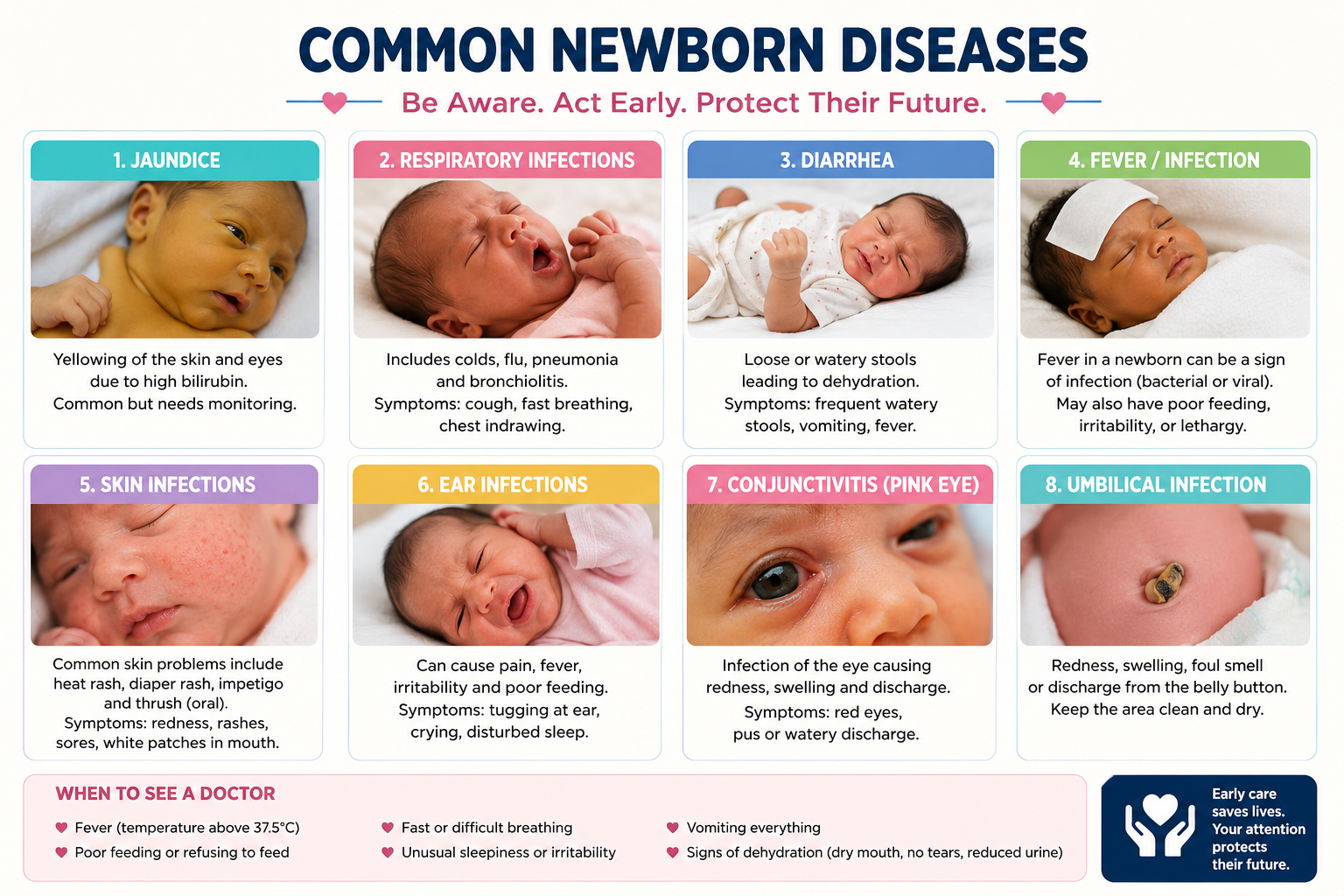
Bringing a newborn home is a beautiful experience, but it can also come with many worries. Newborn babies are still developing their immune systems, which makes them more vulnerable to infections and health problems.
Learning how to recognize signs of sickness in a newborn helps parents know when a symptom is normal and when they should seek medical attention.
1. Newborn Fever: A Warning Sign Parents Should Not Ignore
Fever in a newborn can be a sign of infection. Because young babies can become seriously ill quickly, any fever should be taken seriously.
Signs your newborn may have a fever:
- Baby feels hotter than usual
- Poor feeding
- Excessive crying or unusual fussiness
- Being unusually sleepy
- Fast breathing
- Appearing uncomfortable
2. Newborn Sepsis: A Serious Infection That Requires Quick Action
Newborn sepsis is a serious infection that happens when bacteria or other germs enter a baby’s bloodstream and affect the body.
It can occur before birth, during delivery, or after birth. Since newborns have developing immune systems, the infection can become serious very quickly.
Signs of newborn sepsis include:
- Fever or unusually low body temperature
- Refusing feeds or feeding poorly
- Extreme sleepiness or difficulty waking
- Weak crying
- Fast breathing or difficulty breathing
- Pale, bluish, or unusual skin color
- Feeling cold to touch
- Vomiting
- Swollen stomach
- Fewer wet diapers
- Seizures
If you notice these signs, seek medical care immediately.
3. Newborn Cyanosis: When Your Baby’s Skin Turns Blue
Cyanosis happens when a baby has low oxygen levels in the blood, causing parts of the body to appear blue or purple.
A baby’s hands and feet may sometimes look slightly blue during the first days after birth because their circulation is still adjusting. However, blue coloring around the lips, tongue, or face is a warning sign that needs urgent attention.
Signs of cyanosis in a newborn include:
- Blue or purple lips
- Blue tongue or inside of the mouth
- Bluish skin around the face
- Difficulty breathing
- Fast breathing
- Weak feeding or refusing to feed
- Extreme tiredness
- Grunting sounds while breathing
Seek urgent medical help if your baby:
- Turns blue around the lips, tongue, or face
- Has trouble breathing
- Becomes weak or difficult to wake
- Stops feeding
- Looks gray or unusually pale
Never ignore a newborn who appears blue because it may mean the baby is not getting enough oxygen.
4. Newborn Jaundice: Understanding Yellow Skin and Eyes
Jaundice is common in newborn babies, especially during the first days after birth. It happens when bilirubin builds up in the blood, causing yellow skin and eyes.
Signs include:
- Yellow skin
- Yellow eyes
- Poor feeding
- Excessive sleepiness
- Weak crying
5. Newborn Colic and Excessive Crying
Some babies cry for long periods due to colic.
Signs include:
- Crying for several hours
- Pulling legs toward the stomach
- Clenching fists
- Difficulty calming down
6. Newborn Colds and Breathing Problems
Signs include:
- Blocked nose
- Sneezing
- Coughing
- Difficulty breastfeeding
- Faster breathing
Seek medical attention if your baby struggles to breathe or refuses feeds.
7. Newborn Vomiting and Diarrhea
While small spit-ups can be normal, repeated vomiting or diarrhea can be a sign of illness.
Warning signs include:
- Forceful vomiting
- Watery stools
- Fewer wet diapers
- Dry mouth
- Extreme tiredness
8. Newborn Thrush (Mouth Infection)
Signs include:
- White patches inside the mouth
- Baby becoming uncomfortable during feeding
- Refusing to feed
9. Newborn Skin Problems
Common newborn skin issues include:
- Baby acne
- Diaper rash
- Dry skin
- Cradle cap
Seek medical help if you notice swelling, pus, blisters, spreading redness, or fever.
10. Other Warning Signs That Your Newborn May Be Sick
Contact a healthcare provider if your baby:
- Has difficulty breathing
- Refuses to feed
- Has fewer wet diapers
- Is difficult to wake
- Has seizures
- Has a weak cry
- Suddenly behaves differently
How to Protect Your Newborn From Illness
Practice good hygiene
Wash your hands before handling your baby.
Keep feeding equipment clean
Clean bottles and feeding items properly.
Avoid sick contacts
Limit exposure to people who are unwell.
Attend newborn clinic visits
Regular checkups help monitor your baby’s health and development.
Final Thoughts
Knowing the common newborn sicknesses and warning signs can help parents act quickly when their baby needs help.
Newborns cannot explain when they feel unwell, so parents need to watch for changes in feeding, breathing, crying, and behavior.
Trust your instincts as a parent. If something feels wrong, seek medical advice because early action can make a big difference.